
There is something genuinely magical about a garden that looks just as good after dark as it does in daylight. Good lighting does not just help you see your way to the front door. It shapes mood, highlights the features you are proud of, and stretches your outdoor living hours well into the evening. If you have been searching for landscape lighting ideas to give your property that extra polish, you have landed in the right place.
The great thing about outdoor lighting is that it does not require a full renovation to make an impact. A handful of well-placed fixtures can completely change how a garden feels once the sun goes down. Let’s walk through the styles, placements, and trends to consider before you start picking out fittings, along with a few planning tips that will save you time and money on installation day.
Why Outdoor Lighting Transforms Your Property
A dark garden tends to disappear the moment the sun sets, no matter how much effort went into the landscaping during the day. Thoughtful outdoor lighting ideas solve that problem by keeping every feature visible and inviting well after dusk. Beyond aesthetics, good lighting improves safety along paths and steps, deters unwanted visitors, and genuinely adds to how a property is perceived by guests and passersby alike.
There is also a practical side worth mentioning. A well-lit driveway or entryway makes coming home after dark feel far more comfortable and helps reduce the risk of trips and falls on uneven paving or steps. Lighting is one of those upgrades that quietly does a lot of work without demanding much attention once it is installed.
Types of Landscape Lighting Worth Considering
Not all lighting serves the same purpose, and mixing a few different types tends to produce the best results. Here are the main categories worth understanding before you plan your layout.
1. Path Lighting
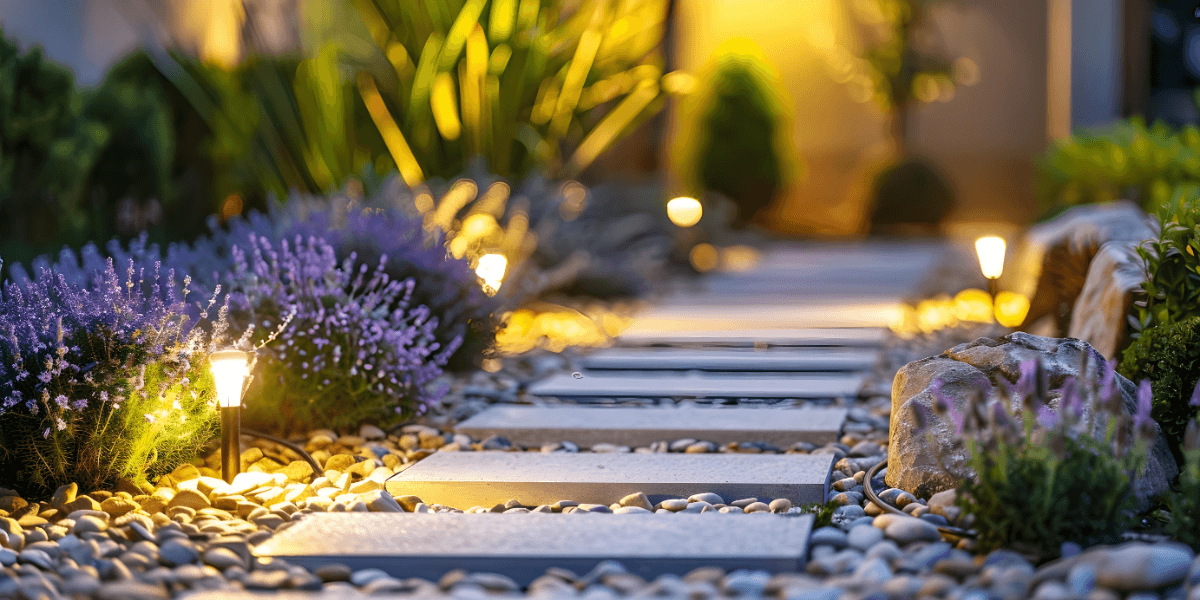
Low, evenly spaced fixtures along walkways guide movement through the garden safely while adding a soft, welcoming glow. They work particularly well along driveways, garden beds, and stepping stone paths. Spacing matters here. Fixtures placed too close together can look busy, while spacing them too far apart leaves dark gaps that defeat the purpose of the lighting in the first place.
2. Uplighting for Trees and Architecture
Placing landscape lights near the base of a tree or feature wall and angling the light upward creates dramatic shadows and depth. This technique works beautifully on mature trees, sculptural plants, and interesting architectural details on the home itself. Even a single well-placed uplight on a striking tree can become the visual anchor of an entire garden at night.
3. String and Festoon Lighting
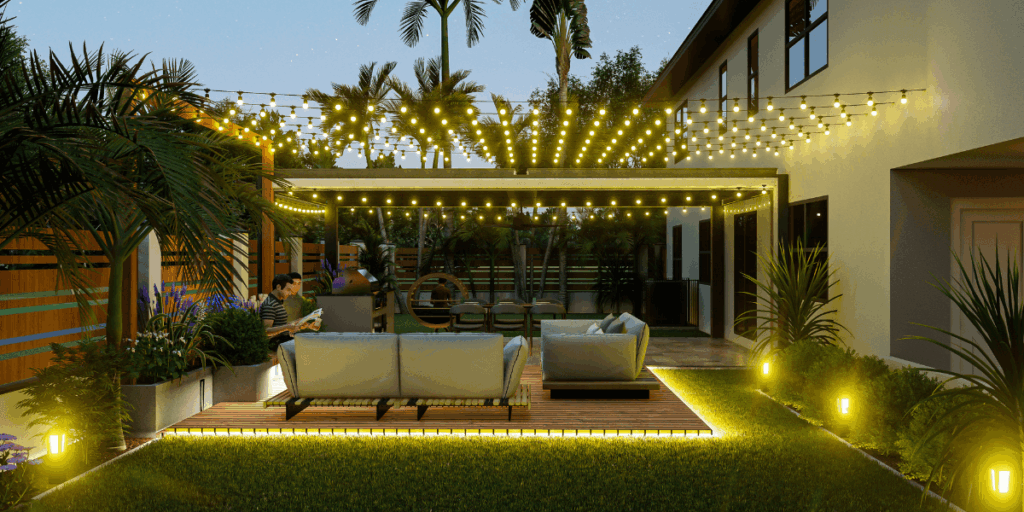
Strung overhead across a patio, pergola, or entertaining area, these lights create a relaxed, warm atmosphere perfect for evening gatherings. They are also one of the easiest and most affordable additions to install, and they suit almost any garden style, from casual backyards to more polished entertaining spaces.
4. Spotlights and Accent Lighting
Small, focused fixtures draw attention to a specific feature such as a statue, water feature, or garden bed. Used sparingly, accent lighting adds intrigue without overwhelming the rest of the space. The trick is restraint. A garden with too many spotlights competing for attention loses the calm, layered effect that makes good lighting design feel effortless.
5. Underwater and Water Feature Lighting
Ponds, fountains, and pools take on a completely different character once lit from within or around their edges. Submersible fixtures rated for outdoor and water use bring a calming, reflective glow to any water feature, and they pair particularly well with softer, warmer light temperatures.
6. Deck and Step Lighting
Recessed fixtures built into steps, decking, or retaining walls improve safety while adding a subtle, architectural glow that does not compete with the rest of the garden lighting. These are especially worth prioritizing on properties with multiple level changes, where poor visibility at night can genuinely become a hazard.
Creative Garden Lighting Ideas for Every Style
Once you understand the fixture types, the fun part is putting them together in a way that suits your garden’s personality. There are countless lighting ideas worth exploring depending on the mood you are after.
Layered Lighting for Depth
Rather than relying on a single fixture type, combine path lights, uplighting, and accent spots to create layers of brightness and shadow. This approach mimics how natural light falls through a space and feels far more considered than a single row of identical fittings. Think of it as building the garden’s nighttime silhouette one layer at a time rather than flooding the whole area with a single light source.
Solar Powered Options
Solar fixtures have improved considerably in recent years, offering a genuinely practical option for garden beds and pathways without the need for wiring. They suit homeowners wanting a simple, low-maintenance upgrade, though it is worth noting that heavily shaded gardens may not charge solar fixtures as reliably as sun-exposed areas.
Color Temperature Choices
Warm white tones tend to suit gardens with timber, brick, or traditional planting, while cooler tones can complement modern architecture and minimalist landscaping. Getting this choice right makes a noticeable difference to how cohesive the finished result feels. Mixing warm and cool tones across the same garden usually looks disjointed, so it pays to settle on one direction early in the planning process.
Planning Around Existing Landscaping
Good lighting design should work with what is already there rather than fighting against it. Established garden beds, mature trees, and existing hardscaping all offer natural anchor points for fixtures. Walking the property at dusk before finalizing a plan often reveals features worth highlighting that are easy to overlook during the day.
Getting the placement and balance right across a whole property takes a bit of trial and error, and this is where working with someone experienced pays off. Our team at Elite Design, also offers expert residential landscaping in Millstone, NJ. Reach out to us today to design a lighting plan that complements your garden’s layout and existing features.
Best Backyard Lighting Setups
When people ask about the best outdoor landscape lighting ideas for backyard spaces specifically, a few combinations come up again and again because they simply work well together.
A few reliable backyard combinations include:
- String lights over a patio paired with path lighting along garden edges
- Uplighting on a feature tree combined with subtle deck step lights
- Spotlights on a water feature alongside warm accent lighting near seating areas
- Recessed step lighting on multi-level decks paired with soft perimeter path lights
These combinations create a cohesive, layered effect rather than a scattered collection of individual fixtures. The goal is always to guide the eye naturally around the space, drawing attention to the features worth showing off while keeping transitional areas softly and safely lit.
Modern Lighting Trends for Contemporary Homes
Lighting design has moved well beyond simple floodlights in recent years. Modern garden lighting ideas for homes now often include smart, app-controlled systems that let you adjust brightness, color, and timing from your phone. Minimalist fixture designs that disappear into the landscaping during the day but create striking effects at night are also increasingly popular, particularly for homes with clean, contemporary architecture.
Another trend worth watching is the shift toward dimmable, zoned lighting systems. Rather than a single on-and-off switch for the entire garden, homeowners can now control different zones independently, brightening an entertaining area for a gathering while keeping pathway lighting soft and understated on a quiet night in.
Frequently Asked Questions
1. What are the best outdoor lighting ideas for a backyard?
A mix of path lighting, uplighting on feature trees, and string lighting over entertaining areas tends to create the most balanced and inviting backyard atmosphere.
2. How do I design landscape lighting?
Start by deciding which landscape features you want to highlight, then layer different fixture types such as path, accent, and uplighting to create depth rather than flat, uniform brightness.
3. Is LED lighting good for outdoor landscapes?
Yes. LED fixtures use significantly less energy, last longer than traditional bulbs, and are available in a wide range of color temperatures suited to different garden styles.
4. Where should landscape lights be placed?
Focus on pathways, steps, entry points, and any features you want to draw attention to, such as trees, water features, or architectural details on the home.
5. Does outdoor lighting increase property value?
Well-designed outdoor lighting can genuinely boost curb appeal and perceived value, particularly when it highlights quality landscaping and improves the usability of outdoor living spaces.
Wrap Up: Bringing Your Garden to Life After Dark
A well-lit garden feels like an entirely different space once evening sets in, and it does not take an enormous budget to get there. Starting with a few key fixtures and building out from there lets you refine the look over time without overwhelming the property all at once. The best results usually come from patience, a bit of experimentation, and a willingness to walk the garden after dark before committing to a final layout.
If you would like a lighting plan designed around your specific garden and home, get in touch with Elite Design. Explore our lawn maintenance service in Millstone, NJ, to understand the value of a well-kept, thoughtfully designed outdoor space. Schedule a consultation with our team today and let us create a landscape lighting design that enhances your property’s beauty, safety, and curb appeal.