
Summary:
Thorough fall care protects plants, soil, and irrigation equipment through winter. Clearing debris, trimming perennials selectively, mulching at the right time, draining water lines, and enriching beds with compost set your landscape up for a healthy return in spring.
Homeowners in West Windsor, Plainsboro, Princeton, Cranbury, Robbinsville, Millstone, and Allentown know how quickly cold weather arrives. What you do in your yard now decides how it looks next April. A clear plan makes the work easier to manage and protects the plants you’ve cared for all year.
Your Fall Garden Cleanup Checklist: Step-by-Step Guide
Start with the basics before you move on to beds and soil. These tasks remove hiding places for pests and disease and keep your lawn healthy through the cold months. Most of these jobs are simple, and tackling them in order saves time.
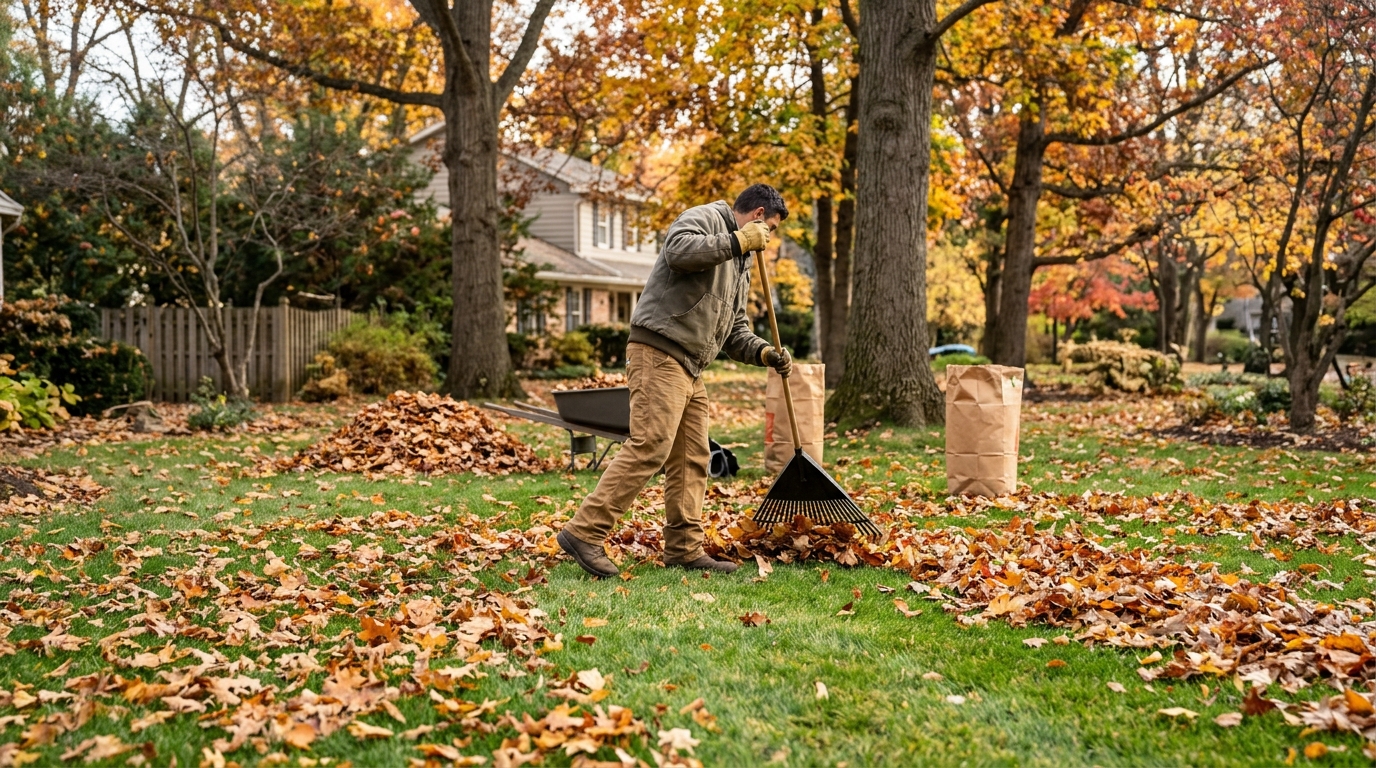
Clear Leaves and Debris
Rake or mulch leaves before they form wet mats that smother grass. Mow thin layers straight into the lawn, and haul away heavy or diseased debris.
Remove Spent Annuals and Weeds
Pull spent annuals, dead growth, and weeds by the roots. Bag weeds that carry seed heads so they don’t spread, and take diseased material off the property.
Prune Only What Needs It
Trim dead, damaged, or rubbing branches now. Save major shaping for late winter, and wait until after spring bloom to prune lilacs and other spring-flowering shrubs.
Make a Final Mow
Keep mowing while the grass is still growing, and never remove more than one-third of the blade height at once. Skip mowing when frost covers the grass.
Aerate and Overseed
Aeration loosens compacted soil so water, air, and nutrients reach the roots. Overseed thin or bare spots with a cool-season grass that suits your lawn.
Clean and Store Tools
Clean and sharpen your tools before cold weather arrives. Store stakes, cages, and trellises so everything is ready when spring work begins.
Cutting Back Perennials Before Winter the Right Way
Once foliage yellows and dies back, trim most perennials to roughly 3 to 4 inches above the soil. Hostas and daylilies can go closer to the ground. This step removes places where pests and disease overwinter.
Not every plant needs cutting. Leave sturdy seed heads such as coneflowers and ornamental grasses standing, since they feed birds and add winter structure. Hold off on Russian sage and butterfly bush until spring. Fall is a good time to divide overgrown clumps of iris and phlox, and diseased material belongs in the trash rather than the compost pile.
Tender plants like dahlias may need indoor storage until spring, even when healthy. Hydrangeas can lose next year’s flowers if you prune them at the wrong time, so check your variety before cutting. Leaving a few leaves and seed heads in place also shelters pollinators and beneficial insects.
Applying Mulch in Autumn Benefits Your Beds All Winter
Mulch insulates roots, reduces erosion, and suppresses weeds. Organic options such as shredded leaves, compost, straw, and pine needles also feed the soil as they break down.
Wait until the soil cools, then spread an even layer that settles at about 2 to 3 inches. Leave a gap around trunks and plant crowns to prevent rot. Mulching too early can delay dormancy, while waiting too long means spreading it over frozen ground. Shred leaves first so they don’t mat down, and tuck leaves or straw around the base of new or sensitive plants for extra protection.
Staying ahead of every season takes consistent attention. Elite Design & Landscaping provides seasonal landscape maintenance that keeps your property healthy and tidy all year.
Winterizing Irrigation and Sprinkler Lines Before the First Freeze
Water left inside pipes expands as it freezes and can crack lines, fittings, and valves. Drain and store hoses, shut off exterior spigots, and blow out sprinkler lines before the first hard freeze. Foam covers protect outdoor faucets. Clear gutters and drainage channels too, so rain and melting snow move away from your beds.
Give your garden beds a deep watering before the ground freezes, since roots keep growing even after the tops go dormant. Evergreens especially benefit from steady watering right up until the freeze, which helps prevent winter damage.
Preparing Garden Soil for Spring Starts This Fall
Loosen compacted soil lightly with a garden fork, then work in compost to restore nutrients. In vegetable beds, turn under spent plants and pull weeds before adding compost. Clear debris first, because decomposing leaves can block nutrients from reaching the soil and trap moisture.
Sow a cover crop such as rye or clover to protect the soil over winter and add nutrients for spring. A fall fertilizer application also keeps grass roots strong through the cold months.
Quick Reference for Fall Bed Tasks
Work through these tasks in order, and finish cleaning the beds before you add mulch.
| Task | Key Detail |
| Leaf removal | Before leaves mat down and smother grass |
| Perennial cutback | 3 to 4 inches above soil after foliage dies back |
| Mulch | 2 to 3 inches settled, after the soil cools |
| Irrigation | Blow out lines before the first hard freeze |
| Soil | Loosen, add compost, consider a cover crop |
FAQs
When should I start fall cleanup?
Begin once leaves start dropping and the growing season slows, and finish before heavy rain or snow arrives. For most local yards, that window falls between late September and early November.
Should I cut back every perennial?
No. Leave sturdy seed heads and ornamental grasses for birds and winter interest, and remove diseased or collapsed plants.
How deep should mulch be?
About 2 to 3 inches once settled works well. Keep it away from trunks and plant crowns.
Why do sprinkler lines need to be blown out?
Trapped water expands as it freezes and can crack pipes and fittings, which leads to costly spring repairs.
Can I leave leaves on my lawn?
Mow thin layers into the lawn. Rake or bag thick, wet mats, because they smother grass and encourage disease.
Final Thoughts
Fall work may feel like a chore, but it pays off every spring. Clear the debris, trim with care, mulch at the right time, protect your water lines, and feed the soil. Each step helps your landscape rest well and wake up strong. Take it one task at a time, and your yard will reward you.
Planning a new outdoor living space next year? Elite Design & Landscaping can walk you through a paver patio vs concrete comparison so you choose the surface that fits your home and budget.