
Summary:
Proper paver care starts with thorough cleaning, paver-safe products, and correct sealing techniques. Regular maintenance also helps address stains, organic buildup, fading, and seasonal wear. In New Jersey, freeze-thaw cycles, moisture, and de-icing exposure can contribute to surface wear, making appropriate cleaning and maintenance important for preserving paver appearance and durability.
Your paver patio or walkway works hard. It handles foot traffic, furniture, spilled drinks, muddy paws, and whatever the New Jersey seasons throw at it. So why do so many homeowners forget about it until it starts looking tired and worn? A little regular care goes a long way, and knowing how to clean and seal pavers properly can help protect their appearance and extend the life of the surface.
Why Paver Maintenance Matters
Pavers are durable by design, but that doesn’t mean they’re maintenance-free. Dirt and organic debris can accumulate in the joints, creating conditions where weeds and organic growth are more likely to establish. Regular cleaning and sealing protect the material itself while also keeping your outdoor space looking intentional rather than neglected. It’s a small investment of effort that pays off in how your property looks and functions.
Below are four essential tips to help you keep your pavers looking their best.
Tip 1: Master the Basics of How to Clean Pavers
Before you even think about sealing, your pavers need a proper clean. Sealing over dirt, algae, or old residue can trap contaminants beneath the sealer and lead to an uneven finish, so proper cleaning really sets the tone for everything else.
The best way to clean a paver patio starts with clearing loose debris, then using a methodical rinse-and-scrub process instead of reaching straight for a pressure washer on high power. If you use a pressure washer, choose a pressure setting and technique appropriate for the paver material to avoid damaging the surface or displacing joint material.
Here’s a general approach that works well:
- Sweep away leaves, dirt, and loose debris first.
- Rinse the surface with water to loosen embedded grime.
- Apply a paver-safe cleaning solution and let it sit briefly.
- Scrub stubborn spots with a stiff-bristled brush, not metal.
- Rinse well and let the surface dry completely.
Different stains call for different approaches. Here’s a quick reference table homeowners often find useful:
| Stain Type | Common Cause | Suggested Cleaning Approach |
| Dark green or black patches | Algae or moss. | Paver-safe algae cleaner and brush scrubbing. |
| Rust-colored spots | Metal furniture or fixtures. | Rust-specific paver cleaner, gentle scrubbing. |
| Oily or greasy marks | Vehicles or grills. | Degreasing solution formulated for pavers. |
| White, powdery residue | Efflorescence (mineral buildup). | Manufacturer-approved efflorescence cleaner. |
Avoid harsh chemicals that aren’t formulated for pavers, since they can strip color or damage the surface. When in doubt, test any cleaner in a small, inconspicuous area first.
Tip 2: Learn How to Seal Pavers the Right Way
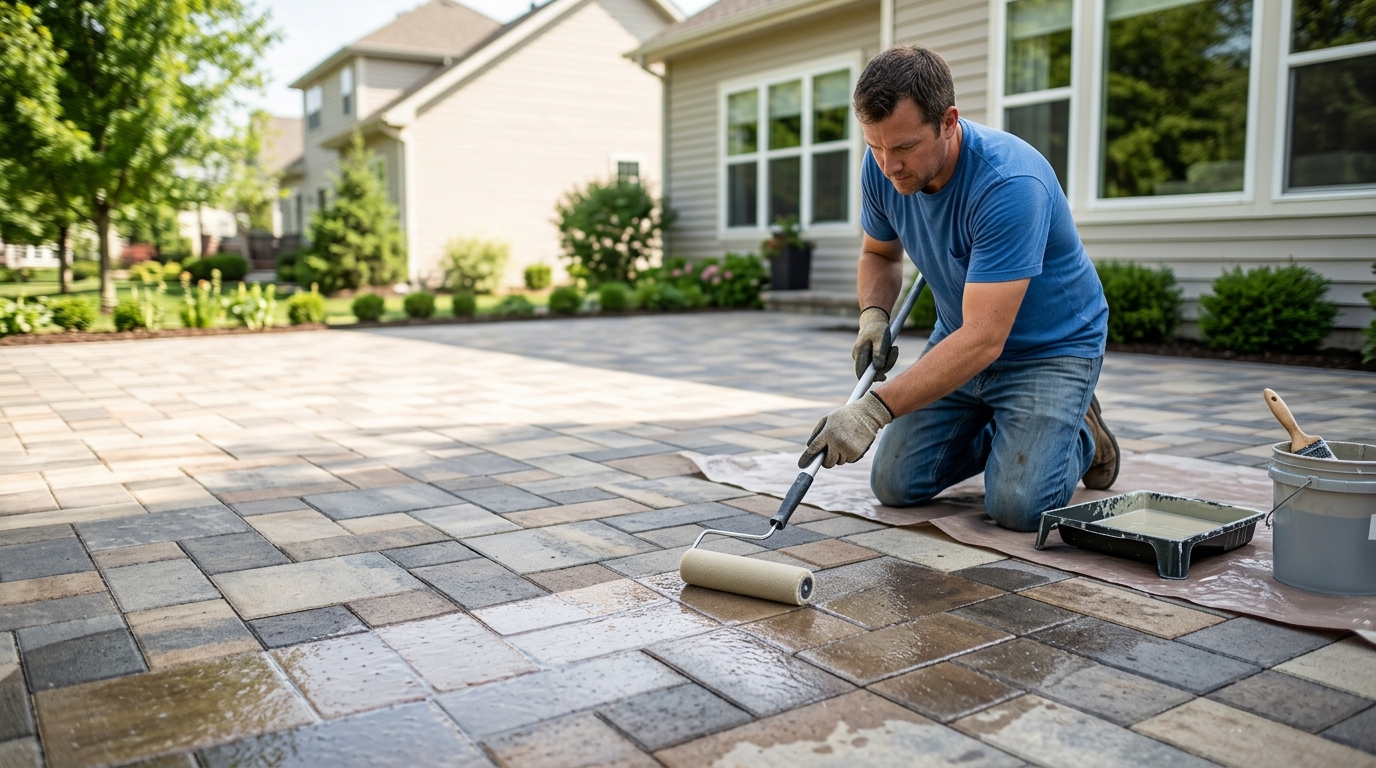
A suitable sealer can help protect pavers against staining and moisture-related wear and, with some formulations, help reduce UV-related color changes. There’s a right way and a wrong way to go about this, and a few paver sealing tips can save you from a patchy or uneven finish:
- Make sure the surface is fully dry before applying the sealer.
- Choose a sealer suited to your paver material and finish.
- Use thin, even layers instead of a single heavy coat.
- Work in manageable sections to maintain consistency.
- Allow sufficient curing time before permitting foot traffic.
Always follow the sealer manufacturer’s instructions for temperature, weather conditions, application method, and curing time. Applying sealer evenly matters just as much as choosing a quality product. Uneven application can lead to blotchy patches or a glossy sheen in some areas and none in others.
If you’re planning a new outdoor surface in Millstone, and want a result that looks polished and stays protected, connect with Elite Design. Get local paver installation in Millstone, NJ, with expert guidance on material selection, layout, and sealing for a durable, finished space.
Tip 3: Know When Pavers Need Cleaning or Resealing
Cleaning and sealing aren’t one-time tasks. Pavers benefit from a maintenance rhythm that matches how much wear they see and how exposed they are to the elements.
Signs Your Pavers Need Attention
Wonderinghow often should pavers be sealed? The honest answer is that it depends on foot traffic, sun exposure, and how the sealer holds up over time in your specific setting. Rather than watching a calendar, watch the pavers themselves. Fading color, increased water absorption, and joints that look dry or worn can all indicate that the pavers and existing sealer need attention.
Weather and Wear Factors in New Jersey
Millstone’s seasonal shifts play a real role here. Freeze-thaw cycles, humidity, and de-icing exposure during colder months can all accelerate wear on unsealed or poorly sealed surfaces. Homeowners who stay ahead of these seasonal stressors tend to get more consistent, longer-lasting results from their pavers.
Tip 4: Choose the Right Products and Support
Not all sealers are equal; the best depends on the paver material, desired finish, and space use. Solvent-based, water-based, and specialty finish sealers each behave differently, and matching the right product to your surface matters more than people expect.
If you’re comfortable with hands-on outdoor projects, DIY cleaning and sealing is absolutely achievable with the right preparation. But for larger patios, intricate paver patterns, or surfaces that have gone a long time without care, bringing in professional support can help you avoid costly missteps and uneven results.
FAQs
1. How Often Should Pavers Be Cleaned And Sealed?
It depends on foot traffic, sun exposure, and climate conditions, not a fixed schedule. There isn’t one fixed resealing schedule for every paver surface. Changes in water beading, fading, or the overall appearance of the surface can indicate that the existing sealer needs attention. Clean pavers periodically to prevent dirt and organic buildup from settling into the joints.
2. What’s The Best Way To Remove Stains From Pavers?
The best approach depends on the stain type. Algae and moss can respond well to a paver-safe cleaner and brush scrubbing; rust marks may require a rust-specific cleaner, oily residue calls for a suitable degreasing solution, and efflorescence should be treated with a cleaner recommended for the specific paver material. Always test a small area first.
3. Can You Seal Pavers Yourself, Or Should You Hire A Professional?
Many homeowners can seal pavers themselves with proper preparation, patience, and even application. However, larger surfaces, intricate patterns, or pavers that haven’t been maintained in a long time often benefit from professional help to avoid uneven coverage or product mismatches.
4. What Type Of Sealer Is Best For Outdoor Pavers?
The right sealer depends on your paver material and the finish you’re after, whether that’s a natural matte look or a glossier wet-look sheen. Water-based, solvent-based, and specialty finish sealers each perform differently, so it’s worth matching the product to your specific surface and climate conditions.
5. How Long Does Paver Sealant Typically Last?
Sealant longevity varies based on traffic levels, weather exposure, and the quality of the product and application. Rather than relying on a fixed timeframe, watch for visual cues like fading, dryness in the joints, or water no longer beading on the surface as your signal that it’s time to reseal.
Final Thoughts
Cleaning and sealing pavers doesn’t have to be complicated, but it does require patience and the right approach at each step. From proper cleaning technique to choosing a suitable sealer and staying attentive to seasonal wear, these habits keep your outdoor spaces durable and attractive for years to come.
Elite Design supports homeowners and businesses alike in keeping their paved surfaces in top shape. Give your business property the attention it deserves with professional landscaping from Elite Design. Choose our commercial landscaping in Millstone, NJ, for carefully planned outdoor spaces that complement your property, create a welcoming first impression, and support a consistently maintained appearance.