
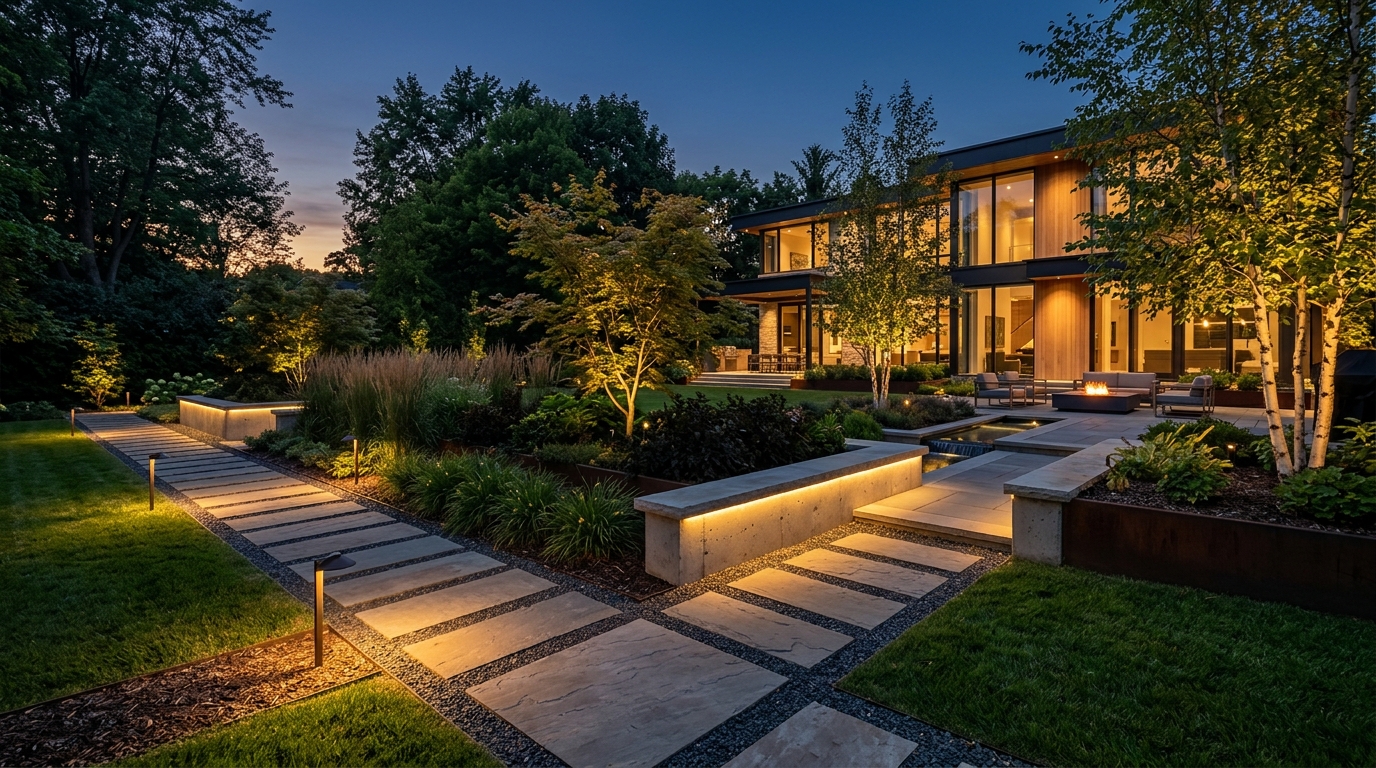
Summary:
Effective outdoor lighting combines the right fixture types, careful placement, and efficient low-voltage LED systems to make a property safer and more welcoming after dark. Once homeowners understand how path lights, spotlights, and well lights differ, where uplights and downlights belong, and what a typical installation costs, they can build a layered plan that fits their budget.
Have you ever pulled into your driveway after dark and wished your yard felt safer and more welcoming? Many homeowners in West Windsor, Plainsboro, Princeton, Cranbury, Robbinsville, Millstone, and Allentown feel the same way as the days grow shorter. A thoughtful plan solves that. Here’s how fixture types, placement choices, and realistic budgets fit together so you can move forward with confidence.
Landscape Lighting Design Principles That Guide Every Project
Good lighting starts with purpose, not products. Before you choose a single fixture, decide what each part of your property needs to do after sunset. A clear plan keeps your budget focused and prevents dark gaps or glare later.
Divide Your Property Into Zones
Map the entry, walkways, patio, garden beds, and perimeter as separate zones. Give each zone one job, such as safety, accent, or atmosphere, and fixture choices and wiring layouts become much easier to manage.
Layer Ambient, Task, and Accent Light
Designers blend three layers. Ambient light provides a gentle base, task light covers steps and entries, and accent light highlights trees and focal points. Lighting every surface evenly can look flat, so leave a few shadowed areas to add depth.
Choose Warm Color Temperatures
Warm white LEDs in the 2700K to 3000K range make plants, stone, and wood look natural and inviting. Cooler light above 4000K can feel harsh around a home, so most residential plans stay in the warm range.
Types of Landscape Lighting Fixtures and Where Each One Belongs
Each fixture has a specific job, and matching the type to the task matters more than buying the most expensive option.
Path Lights
Standing roughly 14 to 24 inches tall, these shielded fixtures guide foot traffic along walkways, driveways, and garden borders without shining into anyone’s eyes.
Spotlights
A narrow beam between 10 and 45 degrees makes spotlights ideal for trees, sculptures, and other focal points. You can also re-aim them as your plantings mature.
Well Lights
Set flush with the ground, well lights aim upward at columns, walls, and tree bases, and the fixture itself stays out of sight during the day.
Downlights
Mounted high in trees or beneath eaves, downlights cast soft light over patios and seating areas below.
Step and Deck Lights
Low-output fixtures set into risers and deck edges make every level change easy to see, which keeps family members and guests safe.
Floodlights
With a wide beam between 60 and 120 degrees, floodlights cover driveways and side yards for security. Use only a few so the property doesn’t look overlit.
Uplighting vs Downlighting Placement for Trees and Structures
Light direction changes the mood of your yard, so plan placement carefully before any trenching begins.
Where to Place Uplights
Position uplights about 12 to 24 inches from a tree trunk and angle them upward at roughly 30 to 45 degrees. For wide canopies, place two fixtures on opposite sides of the tree for a more even look.
Where to Place Downlights
Moonlighting works best when fixtures sit 20 to 30 feet up in mature trees. Light filters through the leaves and casts soft, dappled patterns on the ground below.
Low Voltage LED Landscape Lighting Benefits Worth Knowing
Most residential systems run on 12 volts. A transformer steps household 120V power down to this level, which makes the system safer to handle and easier to expand later. LED fixtures use roughly 75 to 80 percent less energy than halogen bulbs, and quality units often carry ratings of 50,000 hours or more.
Size your transformer at least 25 percent above your total fixture load, and plug it into a GFCI-protected outdoor outlet. Line-voltage systems that run on 120V work differently and need a licensed electrician for installation.
Pathway and Garden Lighting Ideas for Safer Evenings
Restraint produces the best results. Space path lights about 6 to 10 feet apart and stagger them on opposite sides of the walkway so the layout feels natural. A few darker gaps between fixtures create visual rhythm and prevent an overlit look.
In planting beds, aim spotlights or well lights at specimen shrubs and small trees. Plants keep growing, so leave room for next season’s size and keep foliage from covering the fixtures.
Want expert help planning architectural landscape lighting for your home? Elite Design & Landscaping creates layered systems that suit your property and your budget.
Highlighting Architectural Features With Lighting
Your home’s stonework, columns, and entry deserve attention after dark. Grazing places a fixture close to a stone or brick surface and aims light along it to bring out texture. Washing spreads even light across a wider wall, while uplights frame columns and doorways.
Check sightlines from the street and from neighboring homes before you finalize each aim. No beam should shine into a window, and full-cutoff fixtures hide the light source while reducing skyglow.
Landscape Lighting Costs to Plan For
Fixture count, materials, and labor drive the price, and labor often makes up 40 to 60 percent of a professional project. The 2026 estimates below come from industry sources, so local quotes in New Jersey may vary. Do-it-yourself kits typically cost about $60 to $500, though consumer-grade fixtures tend to wear out sooner.
| Project Scope | Fixtures | Estimated Cost |
| Small front yard | 8 to 12 | $1,200 to $2,500 |
| Mid-size property | 15 to 25 | $2,500 to $5,000 |
| Full property | 30 to 60+ | $5,000 to $15,000+ |
FAQs
What are the main types of landscape lighting?
Common types include path lights, spotlights, well lights, downlights, step lights, and floodlights. Strong designs combine several types so each area gets the right level of light.
How far apart should path lights be?
Roughly 6 to 10 feet works for most walkways. Staggered fixtures look more natural than matching pairs.
Do I need an electrician for landscape lighting?
Low-voltage systems may not need a licensed electrician, but 120V systems do. Check local requirements first.
How long do LED landscape lights last?
Quality LED fixtures commonly carry ratings of 50,000 hours or more, which equals many years of nightly use. Consumer-grade kit fixtures often wear out sooner.
What color temperature should I choose?
Warm white (2700K to 3000K) suits most homes because it makes natural materials look inviting.
Final Thoughts
Good outdoor lighting begins with a clear plan. When you zone your property, layer your light, and choose efficient fixtures, your yard becomes safer and easier to enjoy long after sunset. A little patience now saves you from costly changes later.
As the season turns, Elite Design & Landscaping can also help you stay ahead of yard care with a fall garden cleanup checklist tailored to your property.