
Summary:
To fix brown lawn patches, first identify the cause, which may include drought stress, fungal disease, pests, pet urine, mowing damage, or poor soil conditions. The right solution depends on the underlying problem and may involve adjusting watering and mowing practices, treating disease or pests, repairing bare areas, and following proper aftercare. Regular lawn maintenance can also help prevent brown patches from returning.
A lawn that was solid green in June and suddenly dotted with brown circles in August feels almost personal. If you’re a homeowner in Millstone, NJ, you already know the warm, sticky summers here create exactly the kind of conditions that lawn problems love. The good news is that most brown patches are fixable once you understand what’s actually happening beneath the surface.
Learning how to fix brown patches in lawn areas starts with identifying the underlying cause. The right approach can restore damaged grass and help prevent brown patches from returning.
What Causes Brown Spots in Grass?
Before reaching for a bag of fungicide or doubling your watering schedule, it helps to slow down and ask a simple question: what causes brown spots in grass on your particular property? Brown patches aren’t one single problem. They’re a symptom that can point to several very different causes, and treating the wrong one can waste time and add more stress to a lawn that’s already struggling.
Common Culprits Behind Lawn Damage
Here are the usual suspects homeowners run into:
- Drought Stress: Grass fades and feels crisp, usually in sunny or elevated spots.
- Fungal Disease: Circular or irregular patches, sometimes with discolored blade tips.
- Grubs or Surface Insects: Turf that lifts easily because the roots underneath are damaged.
- Mowing Stress: Scalping or dull blades that leave brown streaks behind.
- Pet Urine: Small, repeated spots along a regular walking path.
- Soil Compaction or Thatch Buildup: Dense soil that blocks water, air, and nutrients.
- Uneven Fertilizing: Patchy fading or burned stripes from overfeeding.
Several of these causes can overlap at the same time, which is exactly why guessing at a fix rarely works.
Reading the Clues in Your Yard
Shape and timing tell you a lot. A broad area that browns during a hot, dry stretch usually points to drought. Straight lines often follow a mower path or a gap in sprinkler coverage. Small, repeated spots near a pet’s favorite route are rarely fungal. Circular patches that appear during warm, humid weather can point toward a lawn disease, particularly when other symptoms appear on the grass blades or crowns.
Disease, Pests, or Weather? How to Tell the Difference
Since the right fix depends entirely on the cause, it helps to compare the three common causes side by side.
| Clue | Fungal Disease | Grubs | Drought Stress |
| Timing | Warm, humid stretches with wet grass overnight. | Often noticed later in the growing season. | Hot, dry periods with little rainfall. |
| Patch shape | Circular or irregular; may spread quickly. | Uneven, wilted, or thinning turf. | Broad areas, often tied to dry or sunny spots. |
| Quick home check | Look for distinctive lesions, rings, discoloration, or other symptoms on the blades and surrounding turf. | Tug gently; damaged turf lifts like loose carpet. | Probe the soil; grass stays rooted, but soil feels dry. |
| Likely next step | Improve airflow and moisture control before treating. | Confirm grubs beneath the turf before applying control. | Water deeply, then watch for recovery. |
A tug test alone won’t confirm every cause, but paired with the shape and timing of the damage, it gives you a solid starting point before you buy any product.
How to Fix Brown Patches in Lawn: A Step-by-Step Guide
Step 1: Diagnose Before You Treat
Resist the urge to reach for the nearest lawn product. Walk the yard, note when each patch first appeared, and watch how it changes over the following few days. This one habit prevents most of the wasted effort homeowners run into.
Step 2: Correct Watering and Mowing Habits
Water deeply and early in the morning so blades have time to dry out before evening. Avoid watering at night, since grass that stays wet overnight is far more prone to disease. Raise the mower deck if the lawn has been cut too short, and keep the blades sharp so you’re cutting the grass cleanly instead of tearing it.
Step 3: Treat Confirmed Disease or Pests
If the pattern and blade symptoms clearly point to disease, a fungicide labeled for your specific grass type can stop it from spreading further. If a tug test confirms grubs beneath the damaged turf, a targeted insect treatment addresses the root cause directly. Applying either product without first confirming the cause often wastes money and adds unnecessary stress to a lawn that’s already under pressure.
Getting this diagnosis right takes a trained eye, and that’s exactly where our expert lawn care service in Millstone, NJ can make a real difference. Elite Design can walk your property, confirm what’s actually causing the damage, and put together a treatment plan suited to your soil and grass type rather than a one-size-fits-all guess.
How to Repair Dead Patches in Lawn
Once you control the underlying cause, it’s time to address the visible damage. Repairing dead patches in lawn areas comes down to clearing away what’s dead and giving new grass a real chance to take root.
Removing Dead Grass and Debris
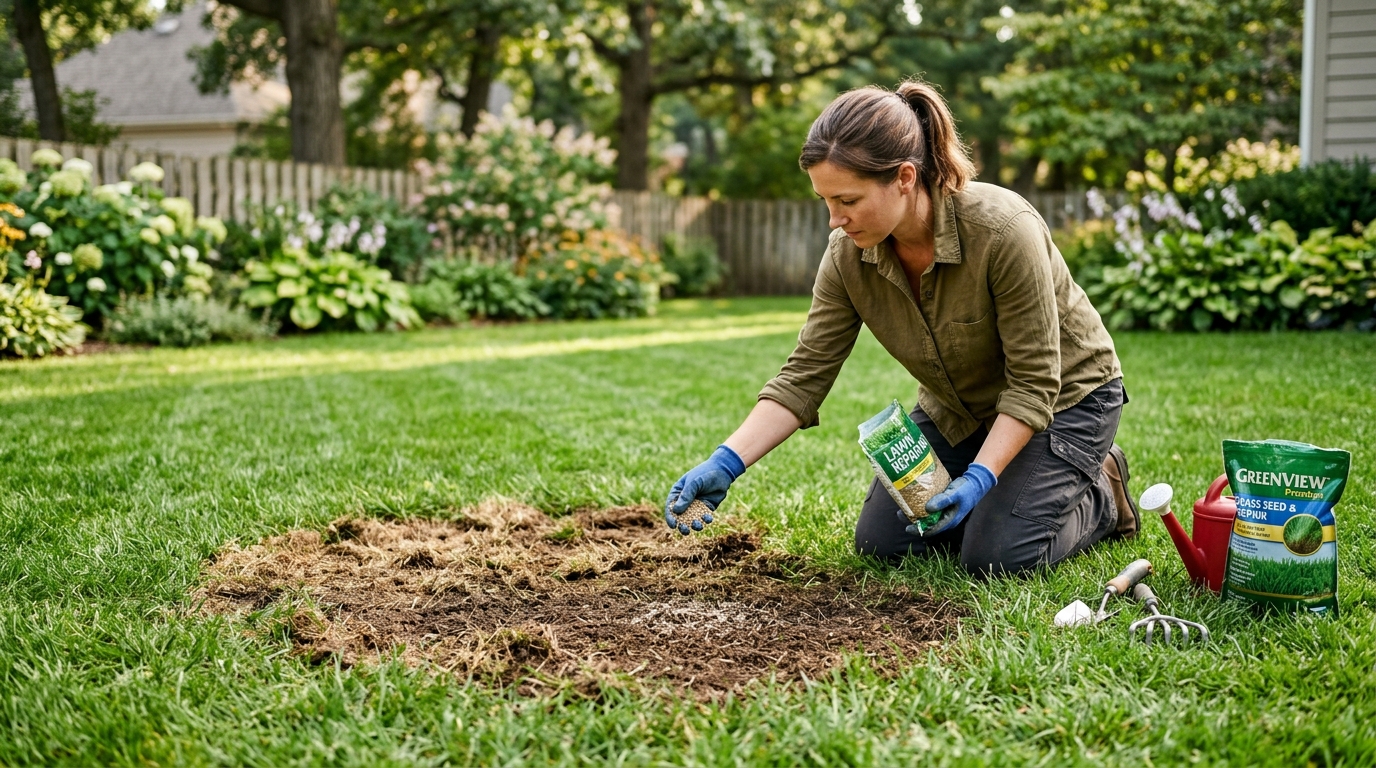
Rake out dead grass, thatch, and any loose debris so seed can make direct contact with the soil underneath. Use a hand rake or garden fork to loosen the top layer, particularly if the soil beneath feels tight or compacted.
How to Regrow Grass in Bare Spots
For sections that are genuinely bare or dead, here’s a simple approach for how to regrow grass in bare spots:
- Loosen the top inch or two of soil in the affected area.
- Mix in a thin layer of compost or topsoil to improve seed contact.
- Spread grass seed matched to your existing lawn and the amount of sun the spot gets.
- Carefully sweep the seeds into the ground and gently water them.
- Keep the area consistently moist until new growth is well established.
Patience matters here more than anything. New grass needs steady moisture and minimal foot traffic while it establishes, so it’s worth fencing off high-traffic bare spots temporarily while they recover.
Brown Grass Patches Treatment: Aftercare That Sticks
A solid treatment doesn’t end the moment new grass appears. Keep watering consistent, hold off on mowing until the new growth is well rooted, and wait on heavy fertilizing until the area is fully established. Aerating compacted soil once a year also helps water, air, and nutrients reach the roots where they’re actually needed.
Signs your lawn is recovering well include:
- New blades are filling in evenly across the repaired area.
- Color is returning to a consistent green rather than patchy.
- The soil holds moisture without staying soggy or puddling.
- Surrounding grass isn’t showing the same symptoms that started the problem.
Preventing Brown Patches from Coming Back
The best long-term fix is a lawn that’s simply less vulnerable in the first place:
- Water thoroughly and less often instead of daily light watering.
- Mow your grass at the appropriate height for its type, and don’t cut more than one-third of the blade at a time.
- Aerate compacted soil every year or two to keep water and nutrients moving.
- Feed the lawn on a steady, balanced schedule rather than one heavy application.
- Watch shaded, low-lying, or poorly drained areas closely during humid stretches, since they tend to stay damp longer.
FAQs
1. What Causes Brown Patches In A Lawn?
Brown patches usually come from one of a handful of causes: drought stress, fungal disease, grub or insect damage, mowing too short, pet urine, or compacted soil that blocks water and air from reaching the roots. Often more than one factor is at play at once, which is why the shape, timing, and location of the patch matter so much for figuring out the real cause.
2. How Do You Know If Brown Patches Are From Disease Or Pests?
Look at the pattern first; disease tends to create circular or irregular patches with discolored blade tips, while grub damage often shows up as turf that lifts easily when you tug on it because the roots underneath are weakened. Timing helps too: fungal issues typically appear during warm, humid stretches, while pest damage is often noticed later in the growing season.
3. Can Brown Patches Be Fixed Without Reseeding?
Yes, if the grass roots are still alive. Correcting the underlying cause, adjusting watering, raising the mower height, treating confirmed disease or pests, or relieving soil compaction often allows the existing grass to recover on its own. Reseeding only becomes necessary when a patch is truly bare, or the grass has died down to the roots.
4. How Long Does It Take For A Lawn To Recover From Brown Patches?
Recovery time varies quite a bit depending on the cause, the grass type, and the weather. Minor stress-related patches can bounce back within a few weeks with corrected watering or mowing habits, while areas that need reseeding take longer, since new grass needs time to germinate and establish a strong root system.
5. How Can You Prevent Brown Patches From Coming Back?
Consistent care is the best defense: water deeply but less frequently, mow at the right height for your grass type, aerate compacted soil periodically, and watch shaded or poorly drained areas that tend to stay damp longer. Catching early signs before they spread makes a big difference in keeping a lawn looking even and healthy season after season.
The Bottom Line
Brown patches can feel discouraging when they show up seemingly out of nowhere, but they’re rarely permanent once you understand what’s actually happening beneath the grass. Diagnose the cause first, correct the underlying watering, mowing, or soil issue, then repair and support the new growth with steady, consistent care.
If your lawn keeps losing its healthy look despite your best efforts, Elite Design can help uncover the problem and restore its appeal. Work with our trusted landscaping contractor in Millstone, NJ, for practical, hands-on solutions that help bring your yard back to a lush, consistent green.