
Summary:
Preparing a New Jersey lawn for winter involves fall-specific care such as clearing leaves, aerating compacted soil, overseeding thin areas, adjusting mowing practices, and applying fertilizer based on grass and soil needs. These steps help protect cool-season turf from winter stress while strengthening its roots and setting the lawn up for healthier, more even spring growth.
As the days get shorter and the air turns crisp across New Jersey, your lawn is quietly getting ready for a long, cold rest. But dormancy doesn’t mean neglect. What you do in the weeks before the first hard freeze affects how your grass looks come spring. Knowing how to prepare your lawn for winter now can mean the difference between a patchy, stressed-out yard in April and a lawn that bounces back thick and green.
This guide walks through a practical fall lawn care checklist built specifically for the New Jersey climate, covering everything from mowing habits to fertilizing schedules and winter protection.
Why Winterizing Your Lawn Matters in New Jersey
New Jersey winters bring a mix of hard frosts, freeze-thaw cycles, and the occasional heavy snowfall, all of which put real stress on turfgrass. Cool-season grasses like Kentucky bluegrass, tall fescue, and perennial ryegrass slow growth and go dormant as temperatures drop. During this slowdown, above-ground growth decreases while the plant continues to maintain and develop its root system when soil conditions remain suitable.
That root development is exactly why fall matters so much. Strong, well-fed roots going into winter are better equipped to survive freezing temperatures and store the energy needed for a quick recovery once the ground warms again. Skip this preparation, and your lawn heads into winter already weakened, making it far more vulnerable to disease, thinning, and slow spring green-up.
A Practical Fall Lawn Care Checklist for NJ Homeowners
Before winter sets in, it helps to work through a clear fall lawn care checklist rather than tackling tasks at random. Here’s what should be on your list.
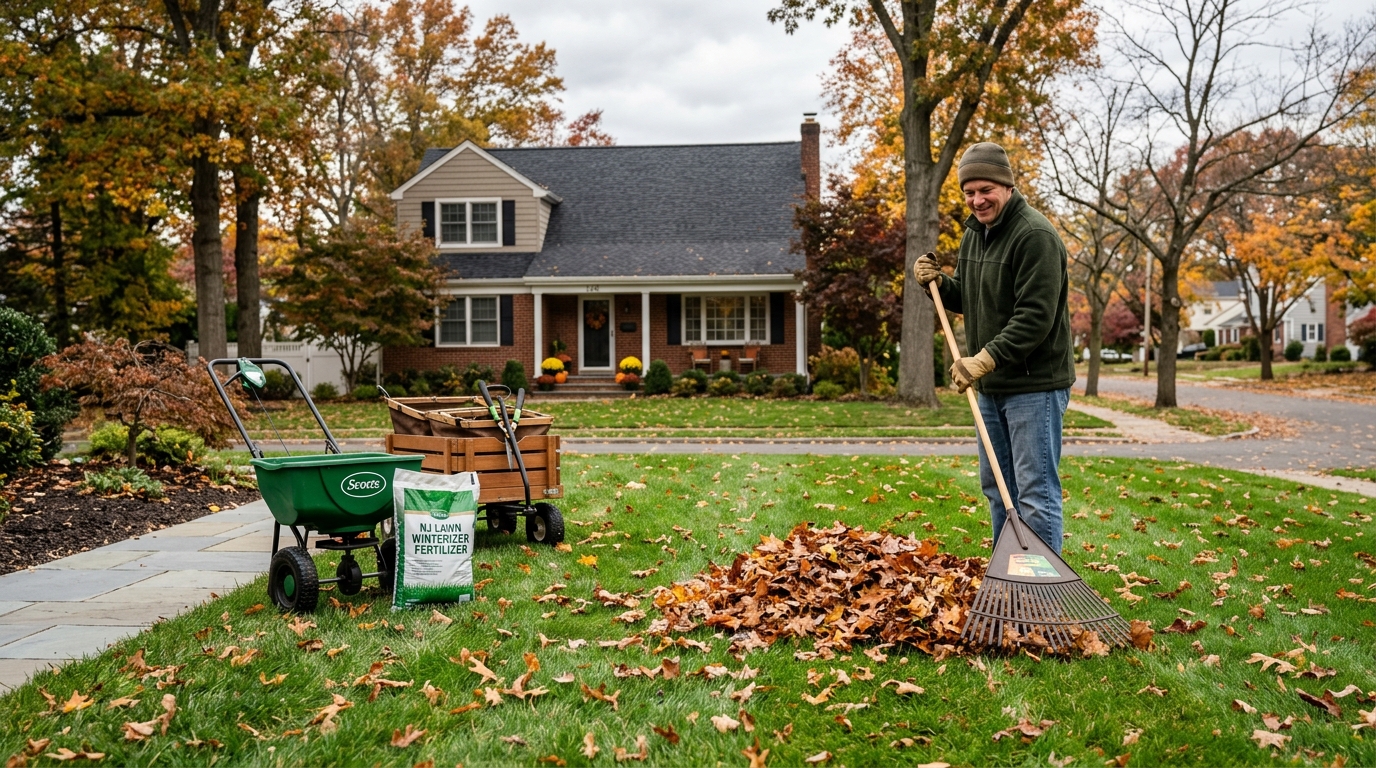
- Clear fallen leaves and yard debris regularly.
- Aerate compacted soil to improve airflow and drainage.
- Overseed thin or bare patches.
- Apply fall fertilizer based on your grass type, lawn needs, and soil-test results.
- Gradually lower your mowing height as growth slows.
- Remove garden hoses, toys, and equipment from the lawn surface.
Each step strengthens your grass before cold weather, and some deserve a closer look.
When to Stop Mowing Before Winter
One question that comes up every year is when to stop mowing before winter. The honest answer is that it depends less on the calendar and more on the grass itself. Continue mowing as long as the grass is actively growing, which for much of New Jersey typically extends into late fall. Once the grass has largely stopped growing and mowing is no longer necessary, you can put the mower away for the season.
Adjust Your Mowing Height Gradually
Rather than making one dramatic cut, continue mowing at the appropriate height for your grass type as long as the lawn is actively growing. Avoid scalping the lawn before winter, but don’t leave it excessively tall going into prolonged snow cover either.
Grass that’s cut too short too quickly becomes stressed and more susceptible to winter damage, while grass left excessively tall can mat down under snow and create conditions that may increase the risk of snow mold. A moderate, gradual reduction strikes the right balance.
Smart Winterizing Lawn Tips: Fertilizing Before the Freeze
One of the most valuable winterizing lawn tips is applying fall fertilizer based on your grass type, soil conditions, and soil-test results. New Jersey cool-season lawns generally benefit from nitrogen applications in late summer and fall, which support turf density and root development. Add phosphorus and potassium only when soil testing indicates they are needed, rather than automatically choosing a fertilizer high in either nutrient.
| Fall Fertilizer Focus | Why It Matters |
| Nitrogen | Supports fall growth and root/rhizome development |
| Phosphorus | Apply when a soil test indicates a need |
| Potassium | Apply when a soil test indicates a need |
| Slow-release nitrogen | Provides a more gradual supply of nutrients |
Timing this application correctly, alongside the rest of your fall routine, takes some local knowledge of New Jersey’s climate patterns. If you’d rather hand that off, Elite Design, an expert landscaping company in Millstone, NJ, can assess your yard and build a fall care plan tailored to your soil and grass type, so nothing important gets missed before winter arrives.
How to Protect Grass in Winter?
Once your fall prep work is done, the focus shifts to protecting the lawn through the colder months. Protecting grass in winter isn’t complicated, but it does require restraint and attention.
Limit Foot Traffic on Frozen Turf
Walking, playing, or parking on frozen or frost-covered grass can crush the grass blades, which are more brittle in the cold. This often leaves behind dead patches that only become visible once the lawn thaws in spring. Where possible, keep foot traffic to walkways and driveways during hard freezes.
Manage Snow and Ice Carefully
Piling shoveled snow in one concentrated spot can smother the grass underneath for weeks, so spreading it out when possible helps. Be cautious with ice melt products near lawn edges as well, since some formulas can damage turf and surrounding soil if overused.
Common Fall Lawn Care Mistakes to Avoid
A few missteps show up year after year and can undo an otherwise solid fall routine:
- Mowing too short in one pass instead of gradually lowering height.
- Skipping aeration on compacted or heavily used lawns.
- Applying fertilizer without considering your grass type, lawn needs, or soil-test results.
- Letting leaves pile up for weeks instead of clearing them regularly.
- Ignoring poor drainage areas that can lead to ice buildup.
Avoiding these common errors keeps your lawn on track for a smoother recovery once temperatures rise again.
Setting the Stage for a Strong Spring
Everything done this fall, from aeration to fertilizing to that final mow, is really an investment in what your lawn looks like next spring. A lawn that goes into winter healthy and well-fed has a real head start once growing conditions return, often greening up faster and more evenly than a lawn that was left to fend for itself.
FAQs
1. When Should You Start Winterizing Your Lawn In NJ?
Fall lawn prep generally begins once daytime temperatures cool down but before the ground freezes, giving grass, seed, and fertilizer enough time to take effect before dormancy sets in.
2. Should You Fertilize Your Lawn Before Winter?
Yes. Fall fertilization can benefit New Jersey cool-season lawns, but the fertilizer should be selected based on your grass type, lawn needs, and soil-test results. Nitrogen is particularly important for supporting fall growth and root development, while phosphorus and potassium should be added when a soil test indicates they are needed.
3. How Short Should Grass Be Cut Before The First Frost?
Gradually lower the grass to a moderate height over the last several mows, avoiding a single drastic cut. Cutting too short stresses the lawn, while leaving it too tall can encourage matting and snow mold.
4. Do You Need To Water Your Lawn In Late Fall?
As growth slows, watering needs generally decrease. Continue watering when the lawn is dry and conditions allow, but avoid unnecessary irrigation once the ground is frozen or regular precipitation keeps the soil adequately moist.
5. What Lawn Care Mistakes Should Be Avoided Before Winter?
Common mistakes include mowing too short too quickly, skipping aeration, using a high-nitrogen fertilizer instead of a proper winterizer, and letting fallen leaves accumulate for extended periods.
Wrap Up
Getting your yard ready for the cold months doesn’t have to be complicated, but it does take planning and consistency. Clearing debris, aerating, overseeding, adjusting your mowing routine, and applying the right fertilizer all work together to protect your grass through New Jersey’s winter and set it up for a strong comeback in spring. If your schedule doesn’t leave room for all of this, professional lawn maintenance in Millstone, NJ from Elite Design can take fall prep off your plate entirely, so your lawn is ready no matter what winter brings.